Saturday, April 22, 2017

Death Brings Life

This week we read a passage about the death of a moth.  It was kind of hard to understand, but the meaning and purpose was very interesting and made me think.  What really intrigued me was her purpose in creating this story.  An observation of a simple moth lead Woolf to the conclusion that death creates value in life.

It's when the moth stops zigzagging and Woolf notices the "rocks, the ploughmen, the horses" outside working when she compares the moth to human beings.  She realizes that what humans and moths have in common are everyday activities that are pointless.  The work that people fill their lives with are all lackluster of true value and meaning, for once they die, all their work will disappear.  Had the workers outside of the window were to suddenly die, everything they had done would go to waste.  The vegetation would continue to grow without regulation until the field no longer looks the same as it was.  This suggests that all the work done my humans lack stability.

However, by the death of the moth, Woolf places value on life. While people live, they aren't able to grasp the concept of value. It is only until things are taken away that they will be truly valued.  Yet people are always threatened by death, we just choose to ignore it. Everyone never considers that the moment they are in could be their last.  Some people never experience their full potential or success, because they pushed it back too far.


Sunday, March 19, 2017

Political Correctness doesn't Correct Anything

I kinda forgot what we talked about in class this week with only getting three hours of sleep on the bus to NYC, but I remember picking sides on whether political correctness is good or bad.  Our class concluded that PC is bad.  My argument mainly sided with source A's, about how PC only euphemized dire situations.  This is ultimately bad because prople start to undermine the situation.  This is seen with the countless homeless people on the streets. Its these euphemizations combined with stereotypes that the homeless stay homeless.  For example, calling the homeless "underhoused" doesn't make the situation nicer, it only labels them nicer.  Paired with the misconception that all homeless people spend their money on drugs and alchohol, it's no wonder that homeless people find it so hard to get off the streets.  Like  Kakutani said, "such language ... make[s] it easier to shrug off the setiousness of the situation"(Kakutani 24).

Sunday, March 12, 2017

Rise of Technology

A topic similar to the Save the Whale, Screw the Shrimp piece we read is how technology has actually taken over our lives, maybe for the worst.  I won't disagree with this, as I along with the majority are examples of how materialistic society has become.  For most of my day I am looking at a computer or phone screen, mindlessly looking at funny photos or doing my homework.  It has gotten to the point where people depend on such technology.

I remember the days of my youth when free time meant going outside and ringing my neighbors doorbells to ask if they can play. Life was simple back then.  I never had to stay long into the night doing homework, and tests never stressed me out.  The only disappointments that ever came was if no one else could play with me outside.  But when that happened, I would just pick up a book and grab a snack and lay comfortably on the couch.  I had no phone or anything. The online world was nonexistent to me.

Of course technology these days is an essential to certain activities and such, but maybe we need a little less of it.  Maybe our society has become too advanced.

Sunday, March 5, 2017

Perspective

We had a huge debate in class on Friday where the class was split between boys and girls on whether men can choose to be unmarked or not.  Generally, the guys leaned more toward not being able to choose, will the girls argues that men's looks are much more flexible.  This made me think.  Is it all just perspective?  Is it just that women care more and notice these small details more?

I think that women just care about this topic more then men do.  I for one, don't really care about my looks, as long as I look how I usually do.  I don't care what others look either. In fact, I probably couldn't even tell if someone wore the same piece of clothing twice in a row.  I don't look for that kind of stuff.  
Also, Stephen the hipster brought up a good point. Class isn't mentioned in the essay.  Tannen thinks that "the men's styles [are] unmarked' (Tannen 553), but what if they are?  Like Stephen said, one may be wearing an Armani suit, while another may be wearing a Kohl's suit.  What if the person wearing the Kohl's suit cannot afford an expensive suit like his coworker? Does that make him marked?  

Another interesting question was brought up at our table.  We were wondering how someone becomes "unmarked".  What are the standards?  How do you judge someone who is thought to be marked when you don't even know the criterion for being unmarked? When so many people wear different styles of clothing it's hard to tell who is unique and who isn't.  The problem with labeling people marked or unmarked is that there is nothing to base them upon.


Sunday, February 26, 2017

Esports

On the topic of gendered spaces, I've noticed that esports tend to lean towards males.  Every major professional competitive team is made up of guys.  In fact, all major tournaments over the course of the year only feature the top male teams in the world.  Of course, there are quite a few female teams out there, but their matches don't get streamed or even if they do, barely anyone watches.  Now I'm not as to why this is; it could be because of the skill gap or sexism in general.

Lets take Counter-Strike for example.  In a year, there are about 20 majors hosted around the world. In these tournaments, 16 teams face off coming from various countries.  It should be noted however, that out of 20 tournaments, only one is dedicated to female gaming, and it's host isn't as well known as the others. It was only until 2015 that a female tournament with a prize pool of $30,000 was announced. $30,000 may seem like a lot, but compared to other majors, who have prize pools of up to 1.5 million dollars, it's definitely not.


Only $5K for first????


I've seen some matches played out between female teams, and I do see a slight skill gap.  But those players still are pros and match some of the best players on the well known teams.  Also in my preference, watching the same top teams compete against each other does get boring from time to time.  Many star plays do come out from the top players, but it's kind of at a point where watchers expect highlight moments out of them.  Adding a number of new talents into the mix would definitely make games more interesting.  Hopefully, female gaming will rise in popularity to match that of male gaming.

Sunday, February 19, 2017

Webkinz

I remember a long time ago, roughly when I was in the third grade, Webkinz stuffed animals were all the craze.  I remember being so obsessed with it, I even went online to play the virtual game. I was jealous of everyone who had the new ones or just had more than me.  Even though I had a good amount (like 7 or 8), I always needed more.

Come to think of it I never really knew why I wanted them.  They were just like any other stuffed animals. I guess it's because they were mainstream.  Everyone else had them so I felt the need to also. In this sense, Webkinz are a lot like the Pink Flamingos mentioned in Price's essay.   Just like the flamingos and how they came in an assortment of colors featuring "tangerine, broiling magenta, ... methyl green", Webkinz came in all sorts of animals.  Perhaps the one I was most proud of was my bald eagle.  I remember the day I brought it to school, and receiving many compliments.

Thinking back on it, it really surprises me how easily something can become a fad in our culture.  Silly Bandz is another great example.  I collected those too.  However popular these fads may be, though, they will never last long.  It seems American just gets up and walks to the next craze.

Sunday, February 12, 2017

Started From the Bottom Now We Here

My parents first stepped foot in America in 1993 to go to college and find better opportunities.  They decided to settle in Virginia.  From there they attended Old Dominion University, where my mom got her masters and my dad got his doctors degree.  Sometime around 2000, they moved to Michigan and bought their first house , were we live in today.  Now, my dad works as a president for a Chinese Car Company, and my mom works at GM.  We live a middle class life, like many others here in Troy, Michigan, but for my parents, it wasn't always like this.

My dad grew up in Wuhan, which is a little off of the east coast of China. He lived his live not having much money.  Though despite not having money, he found happiness in his hobbies, such as soccer and ping pong.  They were able to buy the necessities such as food, water, heating, etc, but luxuries were out of the picture.

My mother's situation was a little bit worse.  She grew up in Shenyang.
 In the house were my mom and her brother, grandpa, and grandma.  My grandpa was a farmer and my grandma worked in a factory.  Often times, they would go days without meat.  In fact, meat was considered a luxury.  Most of their meals consisted of the produce grandpa harvested from his garden.  Mom was a superb student, achieving top scores in the whole school.  It was this hard work and dedication that led her to meet my father in Wuhan university, where they got together and moved to the U.S.

Hearing their backstories really opened my eye to how lucky I am to be born into such an easy life.  Sure, high school and college may be hard but it will never be comparable to what my mom and dad had to go through.  We may not be rich, but we can easily afford many luxuries, even taking vacations every year to extravagant places.  My wish is that I follow in their footsteps.  My wish is to make them proud.

Sunday, February 5, 2017

Back to Ping Pong

After reading Brad Manning essay, "Arm Wresting with My Father", I was reminded of how my mom and I would use to go downstairs and play some ping pong.  We used to play around once a week, and we were very competitive.  There was never no clear winner in our ping pong games.  One day I would win, then the next she would. Some days were off days, and on some days I would be hitting shots as quick as the speed of light.

Ping pong for me was a way to take my mind of things. Forget about homework. Forget about life.  The important thing right then was whether I emerged victorious from the half hour battle.   We would play a best of three, 11 point games.  I remember that even if I lost, it didn't matter, because after ping pong meant ice cream.

Yesterday, I challenged mom to a ping pong match.  Her eyes lit up and replied, "You're on!".  Long story short, I ended up winning, but we both played horribly, our rallies only lasting two or three shots.  The effect was the same though, each of us walking up the stairs out of breath, and grabbing some ice cream after.  After so long I had forgotten the fun of ping pong, so I proposed that from now on we play more often.  She agreed and said that next time she won't go easy on me (As if. I could tell she was just as determined as I was). Just like old times.

Sunday, January 29, 2017

Back to Blogging

This weeks topic of disabilities combined with Nancy Mair's essay changed my perspective about the way we humans look at things.  I myself have always regarded disabilities as unnatural, as something that shouldn't exist.  But from reading Mair's essay, I've finally begin to understand the viewpoint of disabled people.

I feel like disabled people are classified differently than others.  I guess it's because society automatically puts a sign on every disabled person demanding the pity of others.  Many times I have felt sympathy for them, but I don't think sympathy is something they want.  Also, the video we watched made me ponder why I've never really payed much attention as to why mannequins all look the same, but it's probably because that is the norm nowadays, using perfect body sculptures to show off pieces of clothing.  However after reading Mair's essay I fully agree that people with disabilities are being deprived "of even the urge toward independence" (Mairs 14).  Especially in the media where stereotypes portray disabled people as weak, and needing constant support. As stated by Mairs, this mindset leads people to experience "a subtle kind of self-alienation not unlike that experienced by other minorities". This is the way of thinking that Mairs, along with many others including myself, want destroyed.  Disable people are just as capable as we are, and probably even more.

To go along with current events, disable people and immigrants are are going through similar treatment due to the situation we are in right now.  Because of President Trump's #MuslimBan that executive ordered just a couple days ago, many Americans including myself are tremendously ashamed.  To think that all Muslims belong to a terrorist organization is outright absurd, and goes against the constitution and American values.  Think about the countless refugees trying to get into America.  People don't just leave home just because they want to, but rather it is usually a dangerous situation in which they want to flee.  In classifying people differently, we lose the very belief we stand by. And what do we trade this value away for? Some measly counterfeit illusion of safety.
#NoBanNoWall


What is the wall even gonna do for us anyway?  Most illegal immigrants aren't even from Mexico, more people are leaving the US for Mexico than the other way around.

Sunday, December 18, 2016

Long Live the Family

A major theme in A Raisin in the Sun is family and the importance of it.  Almost every decision made is on the behalf of the family. Though the character's goals and desires may have different from each others, any one of them would have benefited the group as a whole.

Although an alcoholic owning a liquor store is quite sketchy, had the idea became successful it would have potentially pushed the Youngers out of poverty.  The reason why this dream isn't taken so seriously is because it came in the beginning of the book, where the family is still relatively divided.  In the beginning of the book, fights are a lot more common and Mama has to keep them together.  It is only until the tragedy at the end of the book happens that the Younger family is finally united.  They have to cope with the loss of the insurance money and Beneatha even disowns Walter, saying that "[Walter] is no brother of mine" (145).  But despite these problems they still unite to overcome Mr. Lindner's racist warnings.  The final goal of the book has turned into the house which represents the creation of one, big, dream for the whole family.

The house itself is also a big factor in the theme of family.  In fact, the whole play is done in the Younger's apartment.  The home is a very cramped one, representing the poverty and oppression, while also remotely symbolizing the togetherness of the family and their dreams. Characters not in the Younger family are still only seen in the Younger's apartment, centralizing the Younger characters.  I have also noticed that most of the bad things happen outside the home, for example Walter's drinking, Travis chasing a rat, and the stolen insurance money.  I'm not completely sure as to what this means, but I think it has to do with the idea that as individuals, the Younger's dreams aren't important.  It is only the dream of the family, of having a new house that is the most important one, and by having undesired events happening outside of the house, this is what Hansberry was trying to exemplify.  It is also fitting that the last scene is Mama leaving the house, representing the family's dream being reached.

Sunday, December 11, 2016

Wealth's Corruption


Wealth and corruption seem to go hand in hand in The Great Gatsby and The Diamond as Big as the Ritz.  Money is often paired with happiness . The more money someone has, he/she is generally happier.  Another way of thinking is that money can easily solve all problems.  While all these may be true, money also causes blindness towards reality, making one think that with money, anything is possible.

Gatsby has so much money that he has no use for it.  Yet what's ironic is that he spends his time looking across the bay at another house from his beautiful mansion.  Because he has so much money, he thinks that he is able to reunite with Daisy and bring back the past.  But the reality is that he can't. Wealth's power only goes so high, and fixing the past isn't something wealth can do. Reading about Gatsby also gives the impression that he didn't live for much.  Sure he lived lavishly, but what his purpose in life and what were his accomplishments? He never got the girl, and he died at a young age. All those years of finding and waiting for Daisy goes to waste after one simple misunderstanding.

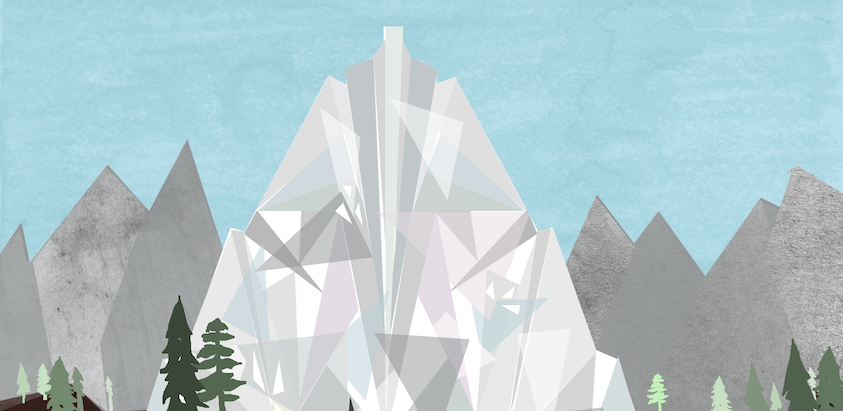
Similarly, Braddock Washington is insanely wealthy, but what does his wealth mean?  His only purpose in life is to guard the family secret, which means that he can never leave the chateau.  He becomes so consumed with his wealth that he will do what ever it takes to protect it, even if it means killing anyone who knows of it.  This greed causes him to blow up the mountain of diamond.  He
destroys all his wealth and everything he lived for just to make sure that no one else can have it.
He lived luxuriously, but without meaning.


Sunday, December 4, 2016

Irony of the Past

"Gatsby believed in the green light, the orgastic future that year by year recedes before us.  It eluded us then, but that's no matter--to-morrow we will run faster, stretch out our arms farther....And  one fine morning-----
So we beat on,  boats against the current, borne back ceaselessly into the past" (Fitzgerald 180).


I've come to realize after reading this book that it is basically all about Gatsby trying to re-create his memories.  Because of this obsession, he is essentially living in the past. Even in the very beginning of the book he is reaching out at the green light, which also represents his past.

One thing I have always wondered is why Gatsby allows all those rumors about him to keep going around. It would seem obvious that such rumors would ruin his reputation.  However, I believe he keeps these rumors to hide his purpose, to reunite with Daisy.  He literally has no use for his money.  He holds these extravagant and lavish parties attended by a hundred people, yet the only purpose for them is to attract Daisy.  In fact, the whole idea of Jay Gatsby is an illusion! We find out later in the book that his real name is James Gatz, along with the fact that he never actually went to Oxford University and a whole other bunch of misconceptions.  He is trying to get away from the "janitor's work with which he was to pay his way through college"(Fitzgerald 105) yet ironically enough he is trying to get back together with Daisy.  It's like he's trying to run away from his past yet chase after it.

I really like this ending to the book. The memorable quote characterizes the characters and people who chase after their past as boats against a current.  Unfortunately, these boats usually end up in tragedy.

Sunday, November 27, 2016

The Irony of Desire

While I was reading The Great Gatsby over break, I noticed something very ironic with Mr. Gatsby.

Jay Gatsby is portrayed as incredibly wealthy, living in a "factual imitation of Hotel de Ville in Normandy"(9) with a marble swimming pool. He has so much money and owns so many things. Yet despite all this, he desires the green light.  Nick's first encounter with Mr. Gatsby is during a late night in which Gatsby is standing at the edge of his dock with his arms stretched out "toward the water in a curious way" (25).  Later in chapters four and five we come to realize that the green light belongs to Daisy's house and of the past relationship Mr. Gatsby and Daisy had together.  We assume Jay Gatsby lives a relaxing and easy life, filled with partying and fun adventures.  This isn't the case when Jay first reunites with Daisy in Nick's house though, for he becomes very nervous and loses his usual calmness. Judging from the way Jay reacts to his encounter with Daisy, it is obvious that he really does want to be back with her again, to have it be just like five years ago .  This ultimately shows that even though someone could have everything he/she needs, something else is always desired.

Sunday, November 20, 2016

The Privilege of Innocence

I've noticed that a reoccurring theme The Bluest Eye by Toni Morrison has been innocence.  In their innocence, children shouldn't have a care in the world. Everyday should be filled with fun and games.  For many characters in The Bluest Eye  though, this wasn't the case.  Many of them lost their innocence at a young age, changing their perceptions and beliefs for the rest of their lives.

Pauline loses her innocence when she marries Cholly Breedlove. Once she marries Cholly, her life becomes a sorrowful one.  Without Cholly to provide a steady income, she has to work very hard to provide for her family. Her loneliness also causes her to become addicted to movies, which in turn starts her obsession of beauty. She later becomes addicted with being the perfect servant for the Fishers.  Influenced by a wealthy white family, she begins to perceive everything as her own, such as the Fishers kitchen and their food.  We see that she has trapped herself in her own fantasy, just like Pecola has.

Speaking of Pecola, she is probably the most traumatic loss of innocence.  She loses her innocence when she gets raped by Cholly. The incident scars Pecola, seen by the "rigidness of her shocked body" and "the stunned silence in her throat" (162).  Once this happens again, Pecola has completely gone insane.  Another instance is when Junior takes Pecola to his house.  After a short fight, Geraldine comes in and curses Pecola out.  All of her tragedies chip away at her innocence and end up taking her mind.

Childhood is supposed to be a happy and blissful time, but when it's not, things get out of hand quick.

Sunday, November 13, 2016

The Influence of Media

For the majority of her life, Pauline in The Bluest Eye by Toni Morrison is heavily influenced by the media. Pauline creates many narratives to portray her life, but the problem with her narratives is that the meanings she derives from them negatively impact her. All of her pain and suffering could have been avoided if she just realized that Cholly would never be the "Stranger" from her stories.  Even her experience with with Fishers causes harm, and not only to herself.  By regarding her own experiences as more meaningful then with her own family, Pauline also hurts her children.  This is the reason why Pecola and her brother don't receive any love from Pauline, making their relationship very brittle. In fact, this is probably why Pecola calls her mother Mrs Breedlove.

Perhaps the most damaging is her addiction to movies. By watching movies, she begins to "regard love as possessive mating, and romance as the goal of the spirit" (Morrison 122).  She comes to believe that love is no loner about "lust and caring for" but rather possession and beauty.  The narrator even describes love and beauty to be the "most destructive ideas in the history of human thought"(Morrison 122).  After watching the movies for some time, Pauline begins to rank people on a scale of beauty. She goes from disregarding physical beauty to embracing it, which shows how much the media has affected her.


Sunday, November 6, 2016

Meringue Pie

When I first saw the nickname Claudia and Frieda came up with for Maureen Peal, I wondered, "Is there another reason for the nickname other than the similarities between the spelling?"  Sure enough, after searching it up on Google images, I came across a small, white, and cute picture of the pie:

Does this description ring a bell? Well it should, because that is exactly how Toni Morrison portrays Maureen Peal in The Bluest Eye.  Maureen Peel is described in the book as a "disrupter of seasons", and "a high-yellow dream child with long brown hair braided into two lynch ropes that hung down her back"(62).  This passage suggests the oppression of blacks, as supported by Maureen's skin color and social status. Also, the "two lynch ropes" also stimulate racial oppression. Even though Maureen is portrayed as a "dream" child, the connotation of her descriptions hold the darker meaning of what her family really is.  Her introduction hints that her family's success is directly related to the oppression of the poor and colored.


No matter how hard Claudia and Frieda try to "restore their equilibrium", their attempts at classifying Maureen as someone equal to them will never work.  This is simply because of their differences in color and class status.  Everyone else looks at Maureen as a perfect role model, and nothing can be done to change that.  


I'm kinda hungry now, I guess this is the burden Shankar has to endure while writing his blog posts :P

Sunday, October 30, 2016

Puzzle Paragraph Two

While others may say that they aren't influenced by society's standards, the truth us that they really are in some way, shape, or form.  In Toni Morrison's novel, The Bluest Eye,  she references a distant conversation she had with a girl named Pecola.  In this conversation, Pecola expresses her longing for blue eyes.  However, Toni doesn't think that Pecola should have blue eyes and tries to make it seem like she isn't profiling. Toni believes that Pecola shouldn't be a lone ranger and accept her looks as who she is.

From this forward, I can tell that beauty and color are going to be two main themes throughout this book. If Pecola keeps trying to change herself based on society expectations, then she will dig herself into a pit of hopelessness.  This pit is sort of like a casino; once someone starts gambling then it becomes impossible to stop.  I expect Pecola's path to be similar to a fire, consisting of destruction and suffering  Although this book isn't a memoir, it will still have the same effect as one.  I am sure verisimilitude will be used throughout this book as the characters fight a battle against society's norms.

Sunday, October 23, 2016

What Race Are We?

Today, race is more of an explanation for cultural differences between different populations of people. Despite all of us being genetically similar, why are we all classified into races?  Is race even a legitimate way of classifying people? After all, we were the ones who set the boundaries.

What makes everyone different are environmental factors such as geography and culture.  After living in a place for quite some time, people begin to have specific changes to adapt to that area. In fact, race was used to categorize people based on different locations.  Based off of where someone was from, he/she would be placed in that race.

Now comes the problem with genetics deciding race.  This isn't possible, since everyone is genetically the same.  Just because black people can get sickle cell and whites can't doesn't mean they can be put into different categories.  People can have different skin color, eye color, hair texture, nose length, and others but these simple differences aren't enough to put everyone into separate sections.

The fact is, everyone is becoming more and more similar.  With immigration, more people have never been to their ancestor's countries or have known their culture and heritage. Despite my parents growing up in China, I don't know a whole lot Chinese culture.  But this difference doesn't separate us; we are still the same family and value the same things.  So what race does this make me?  I believe the answer to that is the "Human" race.

Sunday, October 16, 2016

The Guilt of Survival


The second part of Maus deeply depicts Vladek's influences from the war.  After surviving, he gains many habits, such as hoarding and preserving everything. His conservative nature leads to many arguments between him and his son, Artie.  Now, with his father gone, Artie realizes that depicting Auschwitz is a near-impossible task. He feels hopelessness and frustration because he knows that anything he accomplishes will never be as much of an accomplishment as surviving Auschwitz.  This situation also causes a type of guilt felt by Artie.  He experiences this guilt because he didn't have to go through Auschwitz and isn't able to connect with his father experiences and trauma.  His therapist then says that maybe Vladek acts the way he does because he also experiences guilt.  Different to Artie's guilt, Vladek may feel a survivor's guilt.  On an individual level, many Holocaust survivors have to cope with this guilt, the guilt that they survived the camps yet many others didn't.  All of this guilt talk leads to Artie declaring a bigger guilt. He says that the blame of the Holocaust extents beyond the Germans, and that everyone should always feel it.  This raises the question of who really was responsible for the Holocaust? Could something have been done to destroy the concentration camps?  What could the communities in Germany have done to help the Jews? Could the Allies have gone faster?  

Whoever is responsible for the Holocaust can be debated, but whether it's the result of an army or one man, raising this question shows how wrong and terrifying those times were.


Sunday, October 9, 2016

Our Default Settings

While reading David Wallace's "This is Water" story, I came across the unfamiliar term of "default setting".  Yet even though I had never heard this term before, upon reading the piece I realized that I also had this "setting".  I realize that I often view myself as the main character in this world.  Have I always been self-centered?

An important idea to come out of Wallace's "This is Water" is that everyone subconsciously believes that he or she is the "absolute center of the universe, the realest, most vivid and important person in existence" (233).  For example, let's say I am playing a video game, and I get paired up with another person who isn't as good.  I would feel quite frustrated because this is my natural way of thinking. I wouldn't think that maybe my teammate is new to this game, or that he/she just doesn't care about it as much as I do.  I realize that because of this, the world really is a selfish egocentric world. After all, life mainly is about living life to the fullest, which usually doesn't count others lives.  


I believe that if everyone looks at other people's perspectives instead of their own then the world would be a better place.  Homelessness might not even be a thing if this was the case.  The only problem is that there is no switch, and it doesn't happen on its own. Thinking like this requires a conscious effort in order to "stay conscious and alive, day in or day out" (238). People have to understand that self-centered thinking makes them slip away from reality.